Why is doctor–lab communication still a major issue in digital dentistry?
“Fundamental to success is the need for accurate communication between the doctor and the lab team.”1 Do you agree with this assessment from Dentistry Today? Many would argue that with digital dentistry in the palm of our hands, information has never moved faster. However, information transfer is not necessarily the same as communication.
The cost of poor communication
When information transfer is not clear, lab technicians are left trying to decipher clinical intent without all the details. That poor communication has a direct impact on business outcomes.
One example is remakes. A multicenter audit published in Springer analyzing tens of thousands of fixed prosthodontic restorations found that margin fit discrepancies (29.5%) and proximal contact problems (23.2%) were the leading causes of remakes.2 The authors note that many of these issues are addressable through clearer laboratory prescriptions and improved communication between clinic and lab, highlighting the operational cost of poor information transfer in restorative workflows.
This aligns with findings from the British Dental Journal, which reported that two thirds‑ of laboratory prescriptions audited were non‑compliant, lacking information required for technicians to fabricate restorations predictably.3 “The prescription is often the only connection the technician has to the clinician’s intent. When it’s incomplete, everything downstream is at risk.” — Ceri A. Stewart, CDT, British Dental Journal.
U.S. case studies show that it’s this kind of miscommunication, not fabrication error, that drives most preventable remakes. One U.S. case study published by VCAD Dental Outsourcing Lab revealed that over 60% of remakes originated before production began, primarily due to:
- incomplete or inconsistent prescriptions
- missing bite registrations or opposing scans
- ambiguous shade descriptions
- delayed feedback after delivery
After implementing a structured early validation and communication protocol, remake rates dropped by nearly 40% in six months, from 7% to 4.2%.4
Why digital workflows raise expectations
You may think that digital scans, CAD files and faster turnaround times make communication easier, but in many ways they can actually make it more difficult. Today, for labs to do their work to the highest standards and expectations, technicians need clearly defined margins, precise shade and material direction, and visual references that precisely match clinical intent. Without those elements, speed just makes problems rack up faster.
That’s why labs need to ensure that they are adopting digital workflows that allow labs and clinics to review, comment, and align earlier to help prevent these breakdowns before they turn into remakes, and to ensure they aren’t adding speed to their list of problems.
Four practical ways to improve dental clinic-lab communication
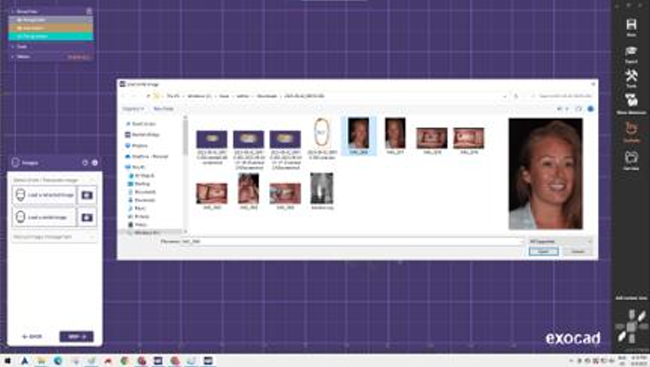
1: Centralize intent: one prescription = one source of truth
One of the most consistent pain points facing laboratories is not the lack of data, but the lack of coherence. Instructions arrive, but they are fragmented. Maybe the information is even spread across prescriptions, emails, messages, and follow up calls. While each piece adds information, none fully conveys the clinical intent, and it’s hard to see everything in one view.
That’s why we offer our lab partners a single, consolidated case view, where scans, images, and prescriptions can all be reviewed together. Clinics can add everything in one place, including intraoral images, scan data, and DICOM information where relevant, all via the same channel.
David Lampert, CDT, Dental Studio New York has been a general dentist for over 24 years, graduating from the University of Copenhagen School of Dentistry and teaching intraoral scanning since 2017. He is a keynote speaker and a key opinion leader, as well as a UK rep for the International Digital Dental Academy. He shared with us how this approach helps with streamlining workflows across the lab. “Having all case-related data imported automatically saves time searching emails, photos, messengers and portals just to gather everything related to the case.” As clinics can attach any files they choose alongside the Rx and the scan, the lab receives everything they need in a single place.
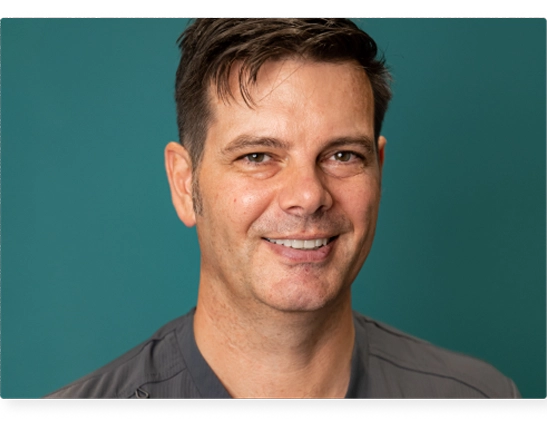
Dr. Jan Einfeldt
Staplehurst, Kent, UK
Dr. Jan Einfeldt is a general dentist with over 24 years as the Clinical Director of his private practice with a special interest in complex restorative treatments and orthodontics. A graduate of the University of Copenhagen School of Dentistry, Dr. Einfeldt has taught intraoral scanning since 2017. He is also a keynote speaker and a key opinion leader for Align Technology. Dr. Einfeldt is a UK representative for the International Digital Dental Academy (IDDA) and sits on its orthodontic committee.
2: Align early on complex cases, while corrections are still easy
Early review can make all the difference when it comes to common challenges like reducing remakes. And this is especially true when we’re talking about complex cases. When scan data can be assessed as soon as it is received, unclear margins, artifacts, or missing context can be flagged immediately, while corrections may be simpler.
When clinics send cases through iTero‑based workflows, scans are available to the laboratory immediately after capture. This allows technicians to review incoming cases as soon as they arrive and identify unclear areas early, particularly in complex or high‑risk cases.
Questions can be raised while the clinical context is still fresh, reducing the likelihood that uncertainty carries forward into design and production.
As soon as it’s seen, the lab can automatically send the case approval to the MyiTero portal, to inform the clinic they are good to go.
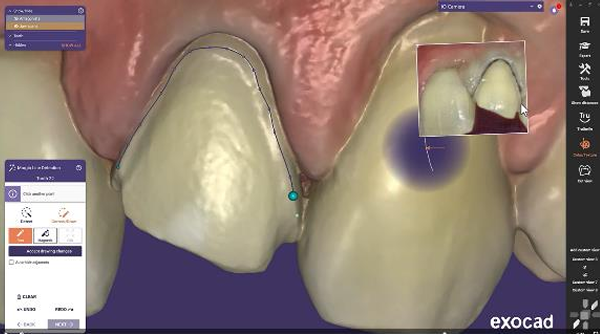
3. Cross‑check instead of guessing, using images as verification tools
Any lab tech knows that written prescriptions often leave room for interpretation, especially when it comes to margins, tissue conditions, or preparation details. Of course, written prescriptions remain indispensable, but they are rarely sufficient on their own. Dentistry is visual by nature, and laboratories rely heavily on what they can verify visually to make confident design decisions.
This is why iTero intraoral images are automatically captured during the scan, and then shared using the iTero-exocad Connector™. These images provide additional visual confirmation of margin lines, tissue conditions and preparation details, helping technicians to validate what they see in the scan against the clinical situation. iTero™ NIRI technology (Near Infra-Red Imaging) also provides extra information about the internal structure of the tooth. When this is available alongside the scan, technicians can rely on shared visual references, turning images into a common language between clinic and laboratory, as well as a powerful verification tool.
With this capability, labs can cross‑check critical elements visually. Margin lines can be confirmed directly against the clinical reality, rather than inferred from scan data alone. This visual verification reduces uncertainty and increases confidence during design.
Oliver Ambridge, RDT is a registered dental technician specializing in digital workflows with over a decade of experience in the dental lab industry. He shared with us that “This new integration enables us to access high-definition intraoral and NIRI technology (Near Infra-Red Imaging) images offering us more information than we ever had before. For instance, problems such as soft tissue covering marginal areas can be readily identified. The enhanced visual clarity empowers us to rectify distortions independently, without direct communication with dentists.”
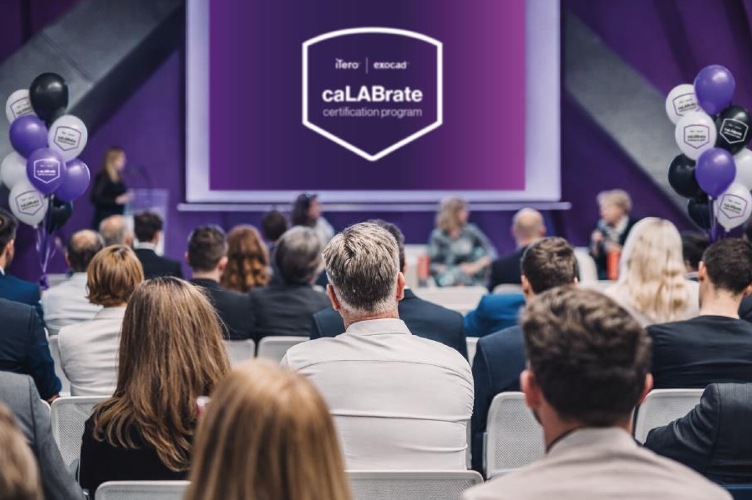
4. Build a learning loop, from blame to shared improvement
Even with improved workflows, variability remains inevitable, particularly across multi‑doctor practices. The deciding factor is often not whether issues occur, but how they are addressed. And transparent communication is a huge part of that.
Rather than treating recurring issues as isolated mistakes, leading labs and clinics increasingly approach them as opportunities to align on how information is captured, interpreted, and improved over time. Educational initiatives help both sides understand each other’s constraints and vocabulary, gradually replacing correction with collaboration. That’s why iTero intra-oral scanners include an education journey that helps labs master scanning protocols and techniques to ensure optimal quality of scan, to help you understand the clinic side of things, too.
Have you heard of the caLABrate program, designed to help you understand how clinical data is captured and interpreted? We focus on understanding recurring issues, improving scan consistency, and establishing a shared vocabulary between clinics and labs. Over time, this approach helps replace corrective feedback with constructive dialogue, strengthening long‑term collaboration. You can register your interest here.
From digital speed to clinical clarity
Digital dentistry has dramatically accelerated how information moves between clinics and laboratories. But speed alone does not guarantee clarity. Many of the most costly issues in restorative workflows, from remakes and delays to unnecessary adjustments can originate from gaps in communication rather than fabrication errors.
The practices and laboratories that succeed in this environment are those that treat communication as part of the clinical workflow itself. By centralizing case information, aligning early on complex cases, verifying details visually, and building shared learning loops, clinics and labs can work with greater confidence and consistency.
1Doctor-lab communication in the digital age, Dentistry Today, April 2020.
2The Saudi Dental Journal (2026) 38:16 https://doi.org/10.1007/s44445-025-00110-2
3Stewart, C. An audit of dental prescriptions between clinics and dental laboratories. Br Dent J 211, E5
(2011). https://doi.org/10.1038/sj.bdj.2011.623
4VCA Dental, Reducing remake rates by 40% through improved doctor-lab communication