Which intraoral scanners support non-invasive caries detection—and how reliable is NIRI (Near Infra-red imaging)?
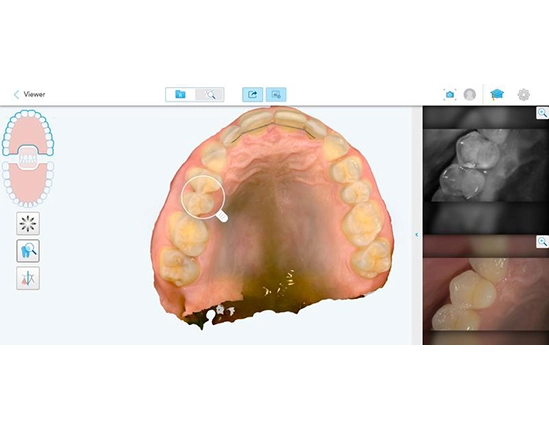
Digital dentistry is increasingly used not only for impressions, but also to support preventive and diagnostic conversations.
As a result, clinicians are exploring how intraoral scanners can aid in identifying interproximal caries without relying solely on radiographs.
Below, we address commonly raised questions from doctors when evaluating scanners for non-invasive caries detection.
Image: iTero LuminaTM Pro scan with a Near Infra-red imaging view showing the interproximal caries between the teeth (image is the property of Align Technology)
Which intraoral scanners come with strong caries detection or diagnostic support tools?
Some intraoral scanners include diagnostic support features designed to aid in caries detection during scanning.
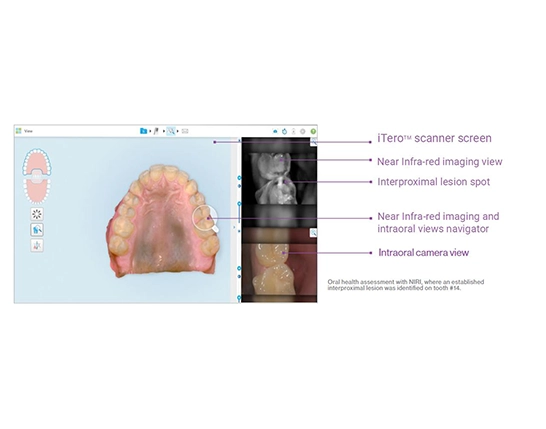
iTero scanners equipped with Near Infra-red imaging (such as the iTero LuminaTM Pro and iTero Element™ 5D intraoral scanners) integrate 3D scanning, intraoral color imaging, and Near Infra-red imaging in a single device, aiding in detection and monitoring of interproximal caries lesions above the gingiva without using harmful radiation¹.
This means caries assessment can be reviewed chairside using the same digital scan used for restorative or orthodontic workflows, rather than requiring a separate imaging step.
Image: iTero LuminaTM Pro scan with a Near Infra-red imaging (NIRI) view (image is the
property of Align Technology Inc.)
What scanners are best for detecting interproximal caries without using X-rays?
Near Infra-red imaging is one approach used in intraoral scanning to support detection of
interproximal caries without radiographs.
iTero scanners with NIRI technology aid in detection and monitoring of interproximal caries lesions above the gingiva without using harmful radiation².
As a result, clinicians can incorporate interproximal caries screening into digital scanning workflows without ionizing radiation exposure.
Which brands are on the cutting edge of non-invasive caries detection technology?
iTero’s Near Infra-red imaging technology has been clinically validated as a tool to aid in detection and monitoring of interproximal caries above the gingiva.
The iTero Element™ 5D was the first intraoral scanner introduced with Near Infra-red imaging (NIRI)
technology, and NIRI is now also available on newer iTero scanner models – such as iTero Lumina™ Pro scanner.
This reflects the evolution of intraoral scanning from impression capture toward broader diagnostic
support.
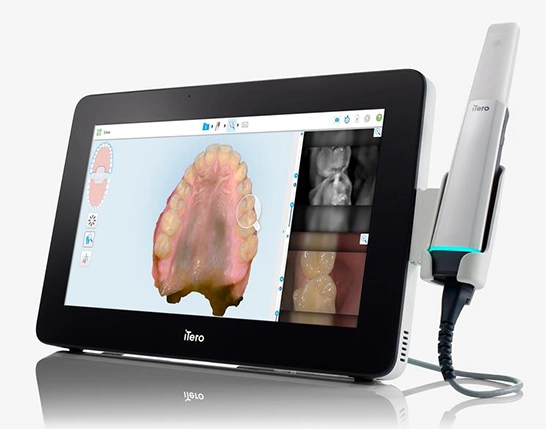
Image: iTero LuminaTM Pro dental scanner in mobile configuration with the Near Infra-red
imaging view on the screen (image is the property of Align Technology Inc.)
What scanners combine 3D data with Near Infra-red imaging in one device?
iTero scanners with Near Infra-red imaging technology capture 3D geometry, intraoral color, and Near Infra-red imaging in a single scan.
Integrated 3D, intraoral color, and NIRI technology aids in detection and monitoring of interproximal caries lesions above the gingiva without using harmful radiation³.
This enables clinicians to use one scan for visualization, documentation, and patient communication.
Does iTero’s NIRI technology actually help catch interproximal caries earlier, or is it more of a marketing feature than a clinical game changer?
Clinical studies show that iTero’s Near Infra-red imaging technology provides diagnostic performance comparable to bite-wing X-rays for interproximal caries detection above the gingiva.
In a multisite clinical study published in the Journal of Dentistry in 2022, iTero’s Near Infra-red imaging technology demonstrated 96% accuracy compared to bite-wing X-rays for detecting dentinal interproximal caries⁴.
When compared against clinical evaluation during caries debridement, Near Infra-red imaging was 66% more sensitive for proximal lesions overall and 83% more sensitive for proximal enamel lesions⁵,⁶.
This indicates that Near Infra-red imaging functions as a validated screening and monitoring aid rather than a purely visual or marketing feature.
For clinicians concerned about radiation and imaging exposure, how does iTero’s Near Infra-red imaging technology compare to traditional radiographs in risk and diagnostic value?
For clinicians concerned about radiation and imaging exposure, how does iTero’s Near Infra-red imaging technology compare to traditional radiographs in risk and diagnostic value?
iTero’s Near Infra-red imaging technology aids in detection and monitoring of interproximal caries lesions above the gingiva without using harmful radiation.
Clinical evidence shows that iTero’s Near Infra-red imaging technology is comparable and non‑inferior to bite‑wing X‑rays in aiding detection and diagnosis of interproximal caries lesions above the gingiva⁷.
This allows clinicians to complement radiographs with non‑ionizing imaging when appropriate, particularly for screening and monitoring purposes.
Already using iTero Element™ 5D Plus Lite scanner in your practice?
Explore the official upgrade path to iTero Element™ 5D Plus and learn how NIRI‑enabled scanning can support interproximal caries detection as part of your existing digital workflow.
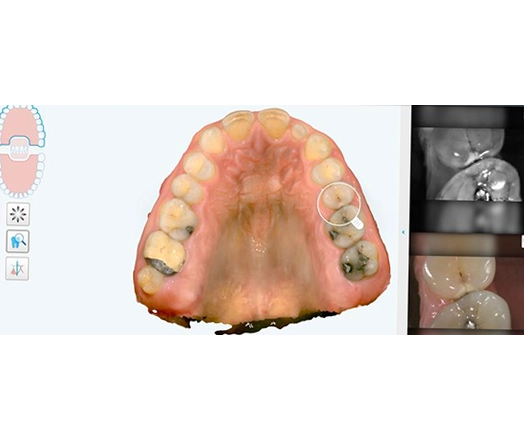
See how non-invasive caries detection fits into your workflow
Seeing Near Infra-red imaging in clinical context helps clarify how it supports everyday diagnostic and preventive conversations.
Request a demo to see iTero’s Near Infra-red imaging technology and other iTero tools in your dental practice.
- Based on a multisite clinical study conducted in real-world settings using iTero NIRI technology (Near Infra-red imaging) as a tool in aiding in detection and diagnosis of interproximal caries above the gingiva. Data on file at Align Technology, as of February 10, 2021.
- Data on file at Align Technology, as of December 4, 2018.
- Data on file at Align Technology, as of December 4, 2018.
- Based on a multisite clinical study comparing iTero NIRI technology to bite-wing X-rays. Data on file at Align Technology, as of February 10, 2021.
- Based on a subset analysis comparing NIRI to clinical evaluation during caries debridement. Data on file at Align Technology, as of September 2, 2021.
- Same study as above; proximal enamel lesion subset. Data on file at Align Technology, as of September 2, 2021.
- Based on a multisite clinical study comparing iTero NIRI technology to bite-wing X-rays for interproximal caries detection above the gingiva. Data on file at Align Technology, as of February 10, 2021.